























Ferrari 488 GTB: The Moment Ferrari Rewrote Its Own Rules
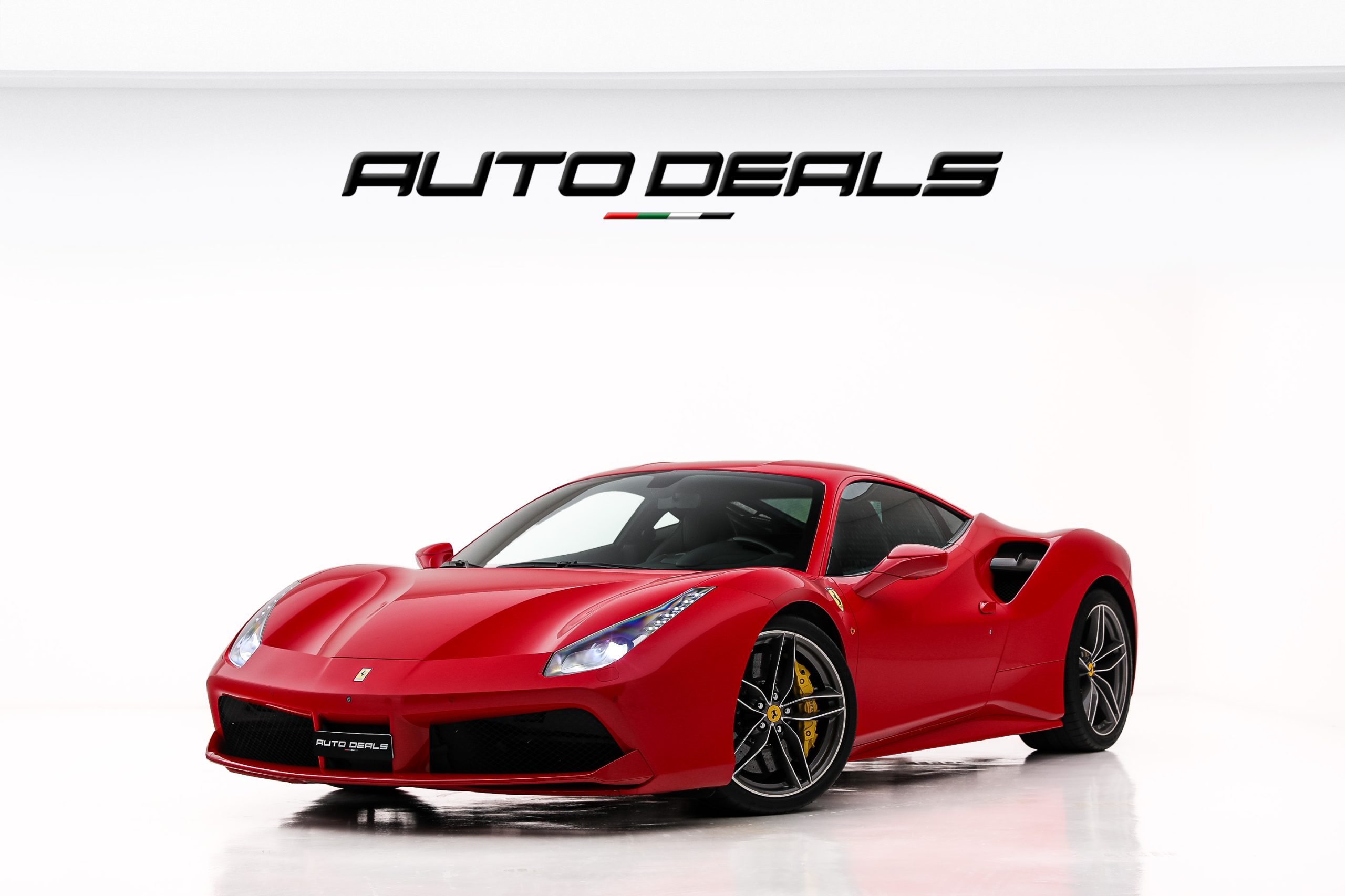
The Ferrari 488 GTB represents one of the most consequential shifts in modern Ferrari history. Introduced as the successor to the naturally aspirated 458 Italia, it marked Ferrari’s return to turbocharging in its mid-engine V8 berlinetta line—a move driven as much by engineering ambition as by regulatory reality. What followed was not a compromise, but a redefinition of how turbocharged performance could feel in a Ferrari.
Rather than softening the brand’s identity, the 488 GTB sharpened it.
Context: Why the 488 Mattered Immediately
When the 488 GTB arrived, skepticism was unavoidable. The 458 Italia had set an emotional benchmark: a high-revving, naturally aspirated V8 paired with steering feel and balance that many considered definitive. To purists, turbocharging implied lag, muted sound, and diluted response.
Ferrari’s challenge was not simply to replace the 458, but to justify change. The 488 GTB needed to demonstrate that forced induction could enhance the Ferrari experience rather than erode it. That pressure shaped nearly every engineering decision behind the car.
Turbocharging, Reimagined
At the heart of the 488 GTB is a twin-turbocharged V8 designed to behave unlike traditional turbo engines. Rather than chasing peak output alone, Ferrari focused on progressive response. Boost delivery was mapped to rise with engine speed, mimicking the linearity of a naturally aspirated motor while still delivering substantially more torque across the usable range.
In practice, this meant the engine felt urgent without being abrupt. Throttle inputs translated into acceleration without hesitation, and power built in a way that encouraged exploration rather than caution. Most benchmarks placed the 488 among the quickest cars in its segment, but the more important achievement was how predictable that performance felt.
Ferrari’s solution reframed turbocharging not as a necessary concession, but as a performance multiplier when executed with intent.
Chassis and Aerodynamics as One System
The 488 GTB’s character is shaped as much by airflow as by horsepower. Aerodynamics were not treated as styling aids, but as functional architecture. Subtle bodywork elements—particularly at the front and rear—manage airflow to increase stability without resorting to oversized wings or visual excess.
On the road, this translates into confidence at speed. The car feels planted without feeling heavy, and responsive without becoming nervous. Steering inputs are met with immediate reaction, reinforcing the sense that the car is working with the driver rather than demanding correction.
Ferrari’s electronic systems, including traction and stability management, are calibrated to expand the usable envelope rather than restrict it. They intervene progressively, allowing skilled drivers to approach the limits while still offering a safety net for less aggressive use.
Driving Experience: Intensity With Control
The defining trait of the 488 GTB is its density of feedback. Everything happens quickly, but nothing feels rushed. Steering is sharp and communicative, the chassis responds instantly, and the drivetrain delivers thrust with relentless consistency.
Compared with its predecessor, the 488 feels more serious, more focused. Where the 458 charmed through sound and balance, the 488 impresses through force and precision. This has led some to describe it as less playful—but that interpretation overlooks its intent. The 488 is engineered to convert speed into control, not spectacle.
On track, this philosophy becomes clear. The car rewards smooth inputs and commitment, offering extraordinary pace when driven decisively. On the road, it remains usable, but it never fully disguises its purpose.
Interior: Familiar, Functional, Focused
Inside, the 488 GTB follows Ferrari’s established mid-engine layout. Controls are concentrated around the steering wheel, reinforcing a cockpit-like environment. The design prioritizes driver focus over luxury indulgence, though material quality remains high.
While the cabin does not offer the digital immersion of newer Ferraris, it benefits from simplicity. Interfaces are direct, responses are immediate, and distractions are minimal. For many owners, this clarity enhances the car’s long-term appeal.
Ownership and Market Perspective
From an ownership standpoint, the 488 GTB occupies a relatively stable position in the Ferrari market. It is modern enough to deliver contemporary performance and reliability expectations, yet analog enough to avoid rapid obsolescence.
Running costs are significant, but consistent with the segment. Importantly, the 488 has earned a reputation for being usable rather than temperamental, particularly when maintained correctly. In the secondary market, values have generally reflected the car’s importance as a technological turning point rather than a transitional footnote.
Competitive Landscape
When evaluated against rivals of its era, the 488 GTB stood apart through its balance of aggression and cohesion. Competitors often matched its straight-line pace or offered more dramatic styling, but few delivered the same integration between engine, chassis, and driver interface.
The 488 did not attempt to soften turbocharging’s impact—it mastered it. That mastery set the template for subsequent Ferrari V8 models and influenced how the broader supercar segment approached forced induction.
Why the 488 GTB Endures
The lasting significance of the Ferrari 488 GTB lies in what it proved. It demonstrated that Ferrari could embrace turbocharging without sacrificing immediacy, involvement, or identity. More than a replacement for the 458, it was a declaration that performance evolution did not require emotional retreat.
Today, the 488 GTB stands as a reference point: the car that redefined Ferrari’s mid-engine formula for the modern era. It remains admired not just for how fast it is, but for how convincingly it changed minds.
Recent Posts


September 30, 2026