






















The Ferrari Enzo: A Collector’s Benchmark from the Analog Supercar Era
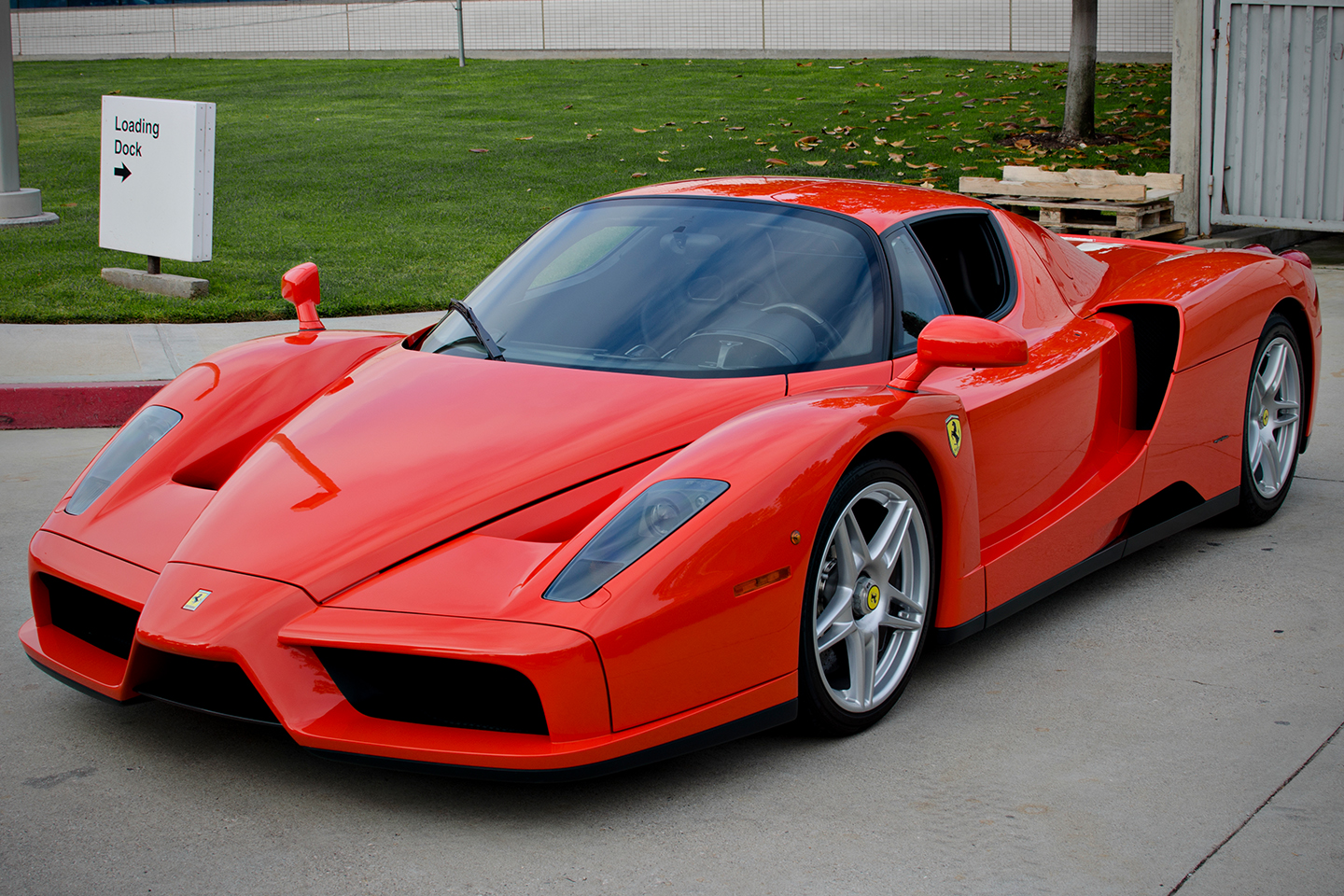
Among modern classic supercars, few names carry the same weight as the Ferrari Enzo. Introduced in 2002, it was never intended to be a high-volume halo model or a comfortable grand tourer. Instead, it was conceived as a statement of Ferrari’s technical philosophy at the time—an uncompromising road car shaped by racing knowledge and built for a very specific group of clients.
Two decades later, the Enzo occupies a rare position. It is not merely valuable; it is widely regarded as a reference point for what a flagship Ferrari should represent.
Production, Rarity, and Early Allocation
Ferrari limited Enzo production to 399 units, each offered to clients with strong relationships with the brand. Ownership history mattered as much as financial capability. Ferrari wanted the car in the hands of dedicated collectors rather than speculative buyers.
Demand exceeded supply almost immediately. Before the car reached full production, resale premiums began to appear. The factory eventually produced a 400th unit, which was donated for charitable purposes. Even with that addition, total production remained exceptionally low by modern standards.
This controlled supply established the Enzo’s long-term position in the collector market from the beginning.
A Car Built Without Compromise
From an ownership perspective, the Enzo differs from many modern hypercars. It was not designed to be easy to drive, comfortable to use, or technologically forgiving. Instead, it reflects Ferrari’s understanding of peak performance in the early 2000s.
The naturally aspirated V12, single-clutch automated gearbox, and stiff chassis create an experience that feels mechanical and direct. Low-speed refinement is limited, and the transmission can feel abrupt in traffic. However, these characteristics are not flaws—they are part of the car’s identity.
Owners tend to view the Enzo less as a daily vehicle and more as a focused mechanical instrument, meant to be experienced on open roads or private collections.
Maintenance and Practical Ownership
Like most limited-production Ferraris, the Enzo requires specialized care. Servicing typically involves Ferrari-authorized technicians, and certain components demand careful attention due to their rarity and complexity.
However, the Enzo benefits from a relatively straightforward mechanical layout compared to modern hybrid hypercars. There are no battery systems, electric motors, or complex hybrid control units to manage. Its performance depends almost entirely on its engine, chassis, and aerodynamics.
For many collectors, this simplicity adds to its appeal. It represents the final era of flagship Ferraris powered purely by naturally aspirated engines, without the technological layers that define today’s hypercars.
Market Performance Over Time
In the years following its release, the Enzo quickly moved beyond its original price bracket. Early resale activity established it as one of the most sought-after modern Ferraris, and values continued to rise as production numbers remained fixed.
Unlike some limited-run supercars that fluctuate with trends, the Enzo’s value has been supported by its historical significance. It is widely viewed as the last Ferrari flagship to rely entirely on analog performance principles. This distinction has helped it maintain strong collector interest across different market cycles.
Today, examples rarely appear for sale publicly. When they do, they typically attract attention from established collectors rather than casual buyers.
Buyer Profile and Ownership Intent
Most Enzo owners fall into one of two categories. The first group consists of long-term Ferrari collectors who view the car as a cornerstone of a larger collection. For them, the Enzo represents a key chapter in the brand’s evolution.
The second group includes enthusiasts seeking a definitive analog-era hypercar. These owners are often drawn to the Enzo’s raw mechanical character and its connection to Ferrari’s Formula 1 knowledge at the time.
In both cases, ownership tends to be deliberate and long-term. The car is rarely treated as a short-term investment or casual purchase.
Relationship to Its Successors
The Enzo’s position becomes even clearer when viewed alongside the Ferrari that followed it. The LaFerrari introduced hybrid technology to the brand’s flagship formula, combining electric assistance with a V12 engine.
While the LaFerrari is faster and more technologically advanced, it represents a different philosophy. The Enzo, by contrast, stands as the final expression of Ferrari’s flagship concept before electrification entered the equation.
For collectors, this distinction is crucial. The Enzo is not just another limited Ferrari—it is the last of a specific lineage.
Long-Term Appeal and Historical Position
As time passes, the Enzo’s importance has only increased. It represents a moment when performance was achieved through mechanical engineering rather than software, hybrid systems, or electronic augmentation.
Its design, driving experience, and construction all reflect that era. For many collectors, this authenticity is what sets the Enzo apart from newer hypercars.
Rather than becoming obsolete, the car has grown more relevant as the industry shifts toward electrification and digital control systems.
Why the Enzo Remains a Collector Benchmark
The Ferrari Enzo endures because it captures a very specific moment in automotive history. It combines limited production, historical significance, and a driving experience that feels increasingly rare in modern performance cars.
For collectors, it represents a turning point—the last flagship Ferrari defined purely by mechanical immediacy. For enthusiasts, it remains a symbol of an era when performance demanded skill, commitment, and respect.
More than two decades after its introduction, the Enzo is no longer just a supercar. It is a reference point for what a modern classic can become when engineering intent, rarity, and historical timing align.
Recent Posts

September 30, 2026