

















What Truly Sets the Ferrari Enzo Apart — And Why It Still Matters Today
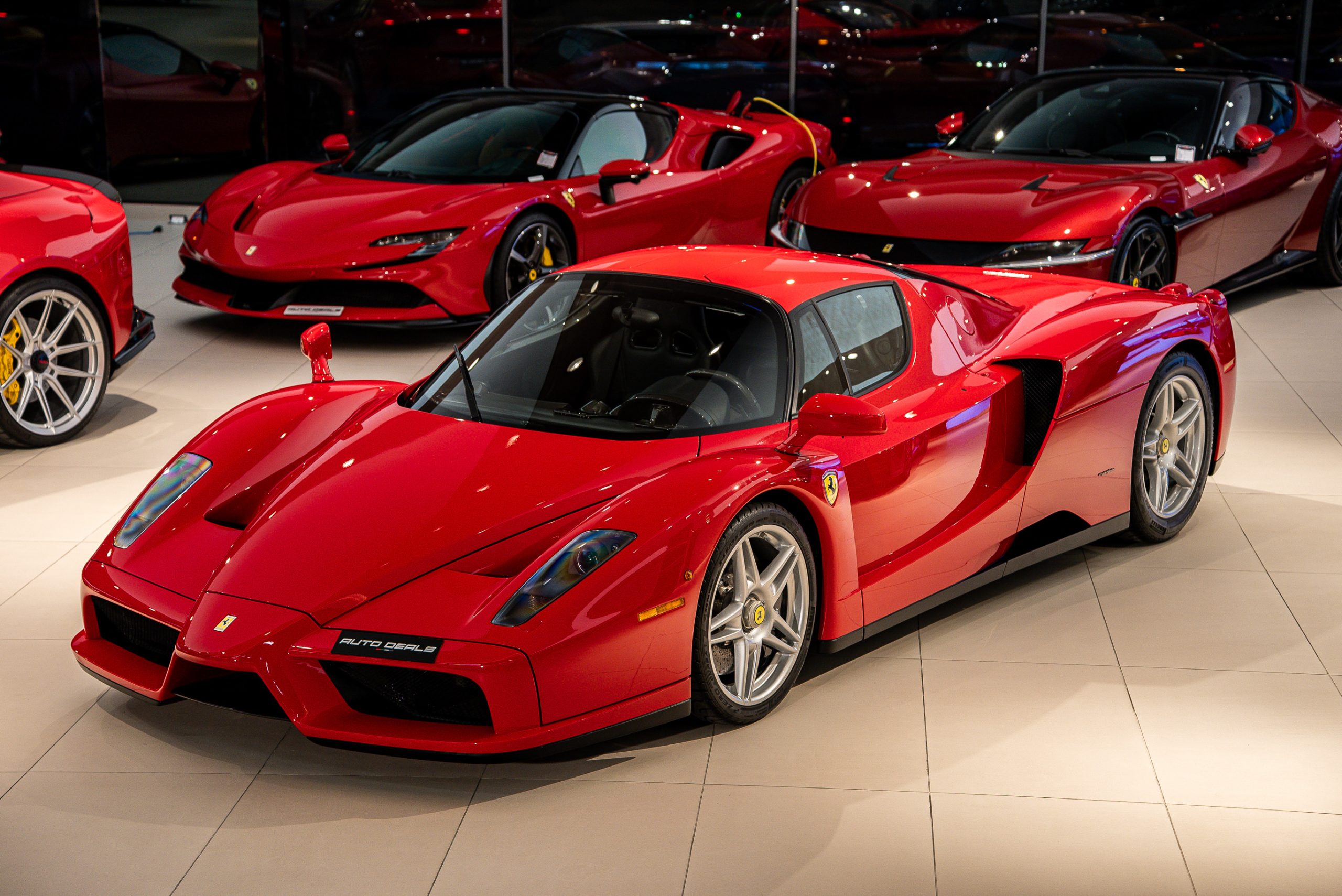
When the Ferrari Enzo debuted in 2002, it entered a world that already knew powerful V12 Ferraris. The company had built legendary twelve-cylinder cars for decades, from classic front-engine grand tourers to the F50 hypercar of the 1990s.
So the Enzo’s importance does not come from the fact that it used a V12.
Its significance comes from what kind of V12 car it was, when it arrived, and what it represented for Ferrari’s future.
More than twenty years later, the Enzo remains one of the most valuable and sought-after Ferraris ever built. Its appeal is rooted in history, engineering, and timing rather than simple performance figures.
A Hypercar Born from Ferrari’s Formula 1 Dominance
The Enzo was developed during one of Ferrari’s most successful periods in Formula 1. Between 1999 and 2004, the team dominated the championship with Michael Schumacher, redefining Ferrari’s image as a technological powerhouse.
Rather than building a traditional luxury supercar, Ferrari chose to create a road car shaped directly by its racing philosophy.
Key engineering elements reflected this approach:
- Carbon-fiber monocoque chassis
- Pushrod suspension inspired by F1 layouts
- Electrohydraulic paddle-shift transmission
- Carbon-ceramic braking system
- Aerodynamics developed for real downforce, not styling
In the early 2000s, this level of race-derived engineering in a road car was rare. Most supercars of the time still relied on aluminum or steel structures and traditional suspensions.
The Enzo felt less like a grand tourer and more like a race car adapted for the road.
Not Just Another V12 — The Start of a New Engine Era
Ferrari had produced many V12 engines before the Enzo, but the Enzo introduced something entirely new.
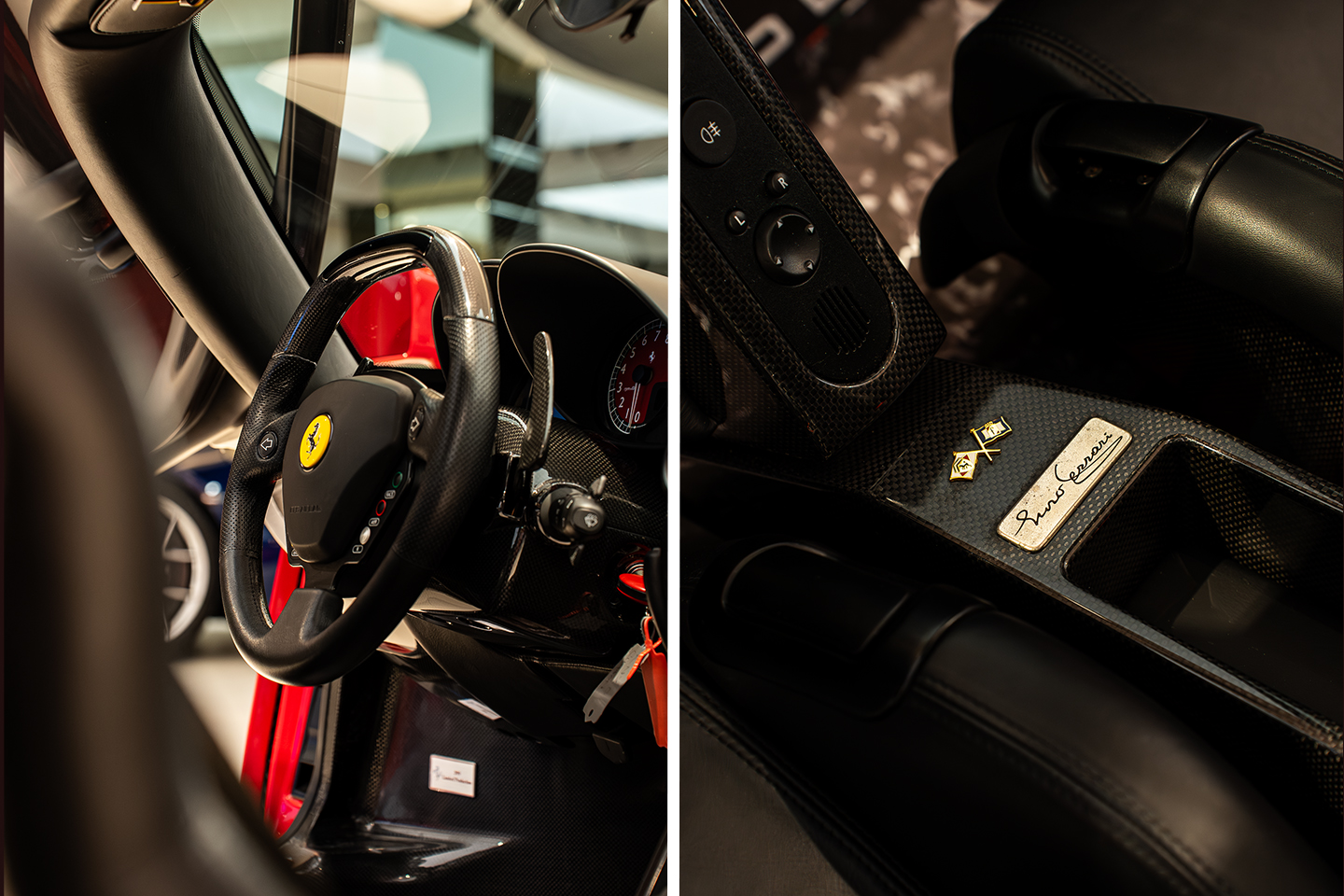
At its heart was the 6.0-liter F140 naturally aspirated V12, producing around 651 horsepower. This engine was not a carryover from earlier models. It was developed specifically for the Enzo with a focus on:
- High rev capability
- Reduced internal mass
- Immediate throttle response
- Motorsport-inspired engineering
More importantly, this engine did not end with the Enzo. It became the foundation for Ferrari’s modern flagship V12 models, including:
- Ferrari 599 GTB Fiorano
- Ferrari F12berlinetta
- Ferrari 812 Superfast
- Ferrari Daytona SP3
This means the Enzo was not just another V12 Ferrari.
It launched the engine architecture that would define Ferrari’s top models for the next two decades.
A Unique Moment Between Analog and Hybrid Eras
One of the most important reasons for the Enzo’s lasting value is its position in Ferrari’s technological timeline.
Ferrari’s halo car lineage shows a clear progression:
| Model | Character |
|---|---|
| F40 | Raw, turbocharged, analog |
| F50 | Naturally aspirated V12 with F1 influence |
| Enzo | F1-derived engineering, extreme performance |
| LaFerrari | Hybrid hypercar with advanced electronics |
The Enzo sits at a unique point:
- More advanced than the analog F40 and F50
- Still naturally aspirated and mechanical in character
- Built before hybrid systems and heavy electronic intervention
It represents the last Ferrari flagship built purely around a naturally aspirated engine and mechanical immediacy.
For collectors, this makes the Enzo a bridge between two eras: the raw past and the electrified future.
Performance That Felt Like the Future in 2002
At the time of its release, the Enzo’s performance figures were extraordinary:
- 0–100 km/h in about 3.1 seconds
- Top speed around 350 km/h
- Carbon-ceramic brakes as standard equipment
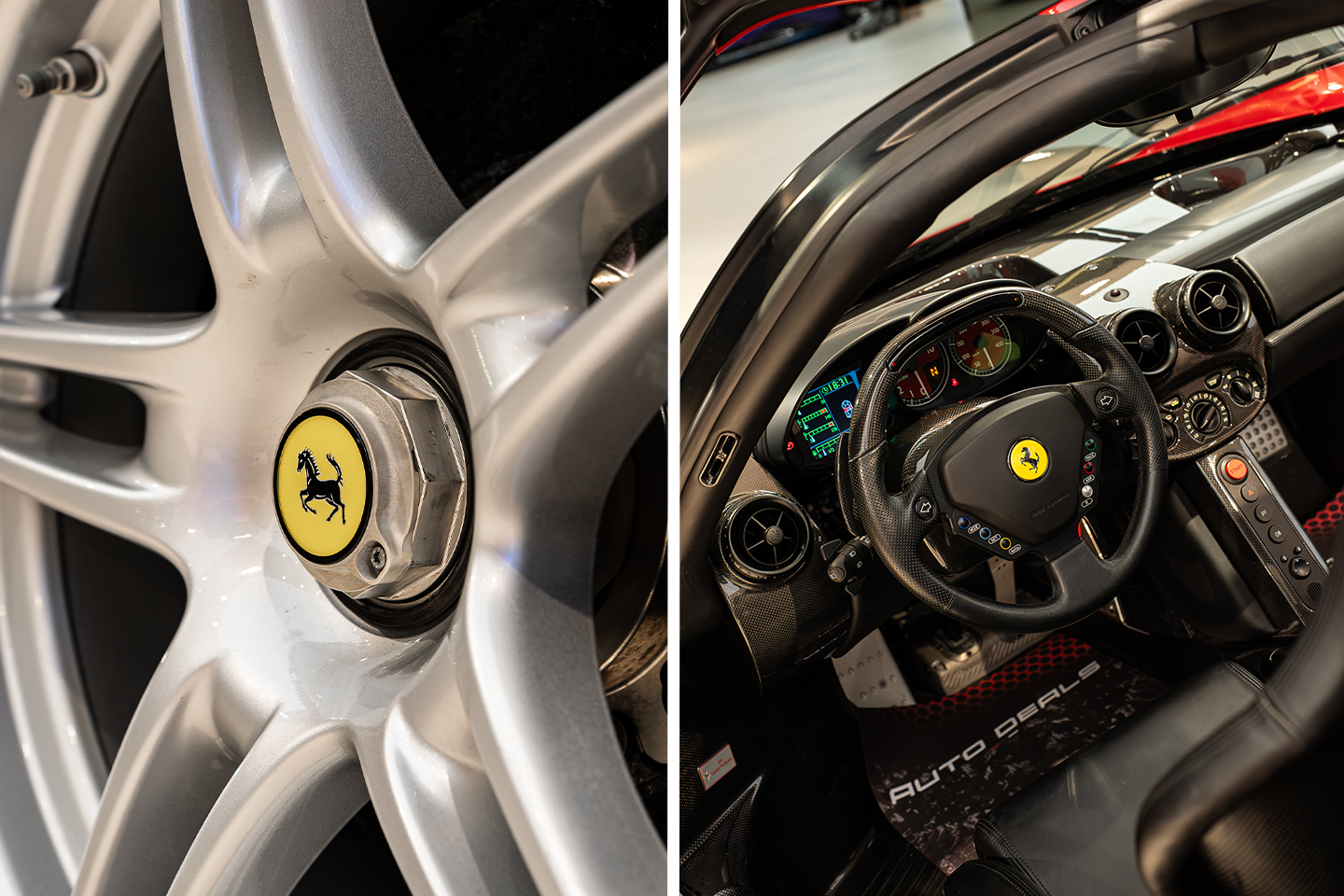
These numbers placed it at the forefront of the global supercar market.
But more important than the numbers was the character of the performance. The Enzo was not designed to be comfortable or forgiving. It was:
- Direct
- Demanding
- Highly responsive
- Mechanically focused
It required commitment from the driver, much like a racing machine.
Today, many supercars are faster, but they are also easier to drive. The Enzo’s demanding nature has become part of its appeal.
Limited Production and Controlled Ownership
Ferrari initially built 399 units of the Enzo, reserving them for selected clients with strong ownership histories.
Buyers were typically:
- Long-time Ferrari customers
- Owners of multiple previous models
- Personally invited by the company
A 400th car was later built and auctioned for charity.
This controlled distribution created:
- Immediate exclusivity
- Strong collector interest
- A tightly held ownership circle
Such factors play a major role in the Enzo’s long-term value.
Why the Enzo Remains So Valuable Today
The Enzo’s value is not based on a single feature. Instead, it comes from a combination of historical and engineering factors:
- It is part of Ferrari’s most important halo-car lineage.
- It was built during Ferrari’s dominant Formula 1 era.
- It introduced the F140 V12 engine family.
- It represents the last pre-hybrid Ferrari hypercar.
- Production was strictly limited and controlled.
Together, these elements give the Enzo a significance that goes beyond performance figures.
More Than a V12 Ferrari
Ferrari had many V12 cars before the Enzo. But none arrived with the same combination of racing influence, technological significance, and historical timing.
The Enzo was:
- A Formula 1–inspired hypercar
- The foundation of Ferrari’s modern V12 lineage
- A bridge between analog and hybrid eras
- One of the most exclusive Ferraris ever built
That is what truly sets it apart—and why, more than two decades later, it remains one of the most sought-after Ferraris in the world.