




















Why the Ferrari Enzo Remains One of the Most Coveted Supercars Ever Built
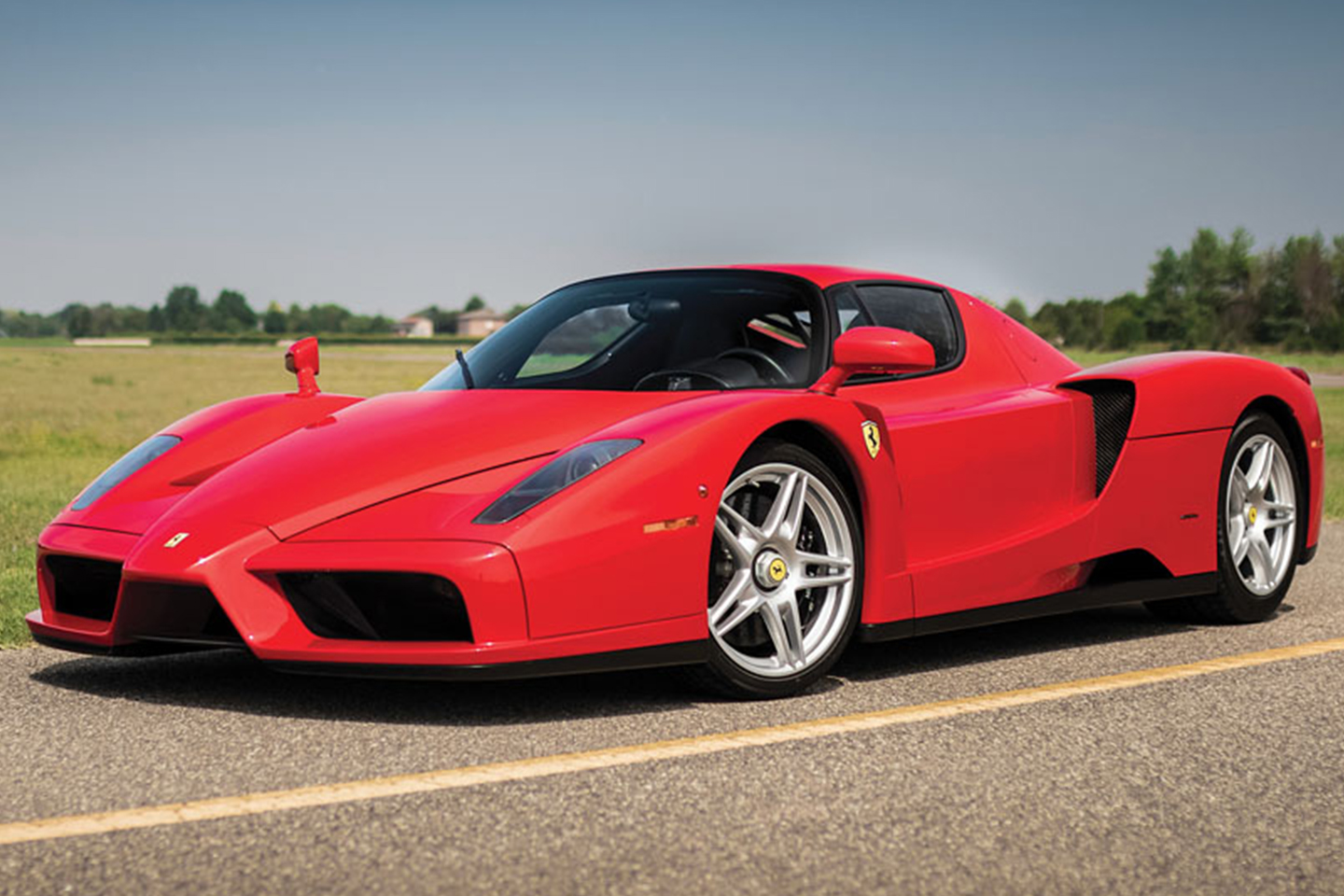
The Ferrari Enzo: Engineering Ferrari’s Ultimate Road Car
The Ferrari Enzo, unveiled in 2002, ranks among the most significant road cars ever produced. Its importance extends beyond Ferrari’s own lineup into the broader history of performance automobiles.
Ferrari conceived the Enzo as a bridge between Formula 1 technology and road cars. Engineers prioritized performance over comfort and mass appeal. The result was a no-compromise supercar focused on engineering purity.
Unlike Ferrari’s numbered models, the car bore the name of founder Enzo Ferrari. The company reserved this honor for cars meant to define an era, much like the 288 GTO and F40 before it.
In hindsight, the Enzo marked the end of the analog supercar era. Soon after, electronics, hybrid systems, and regulations reshaped performance cars worldwide.
Design Driven by Aerodynamics, Not Ornament
Ken Okuyama at Pininfarina designed the Enzo, and the styling initially divided opinion. Sharp lines and exposed carbon fiber replaced the flowing curves of earlier Ferraris.
Function dictated nearly every surface. The narrow nose directed airflow above and below the car. Body channels and vents served cooling and downforce needs rather than visual drama.
Ferrari avoided a rear wing. Instead, engineers relied on a flat underbody, diffuser, and carefully managed airflow for stability. This decision reflected Ferrari’s confidence in aerodynamic efficiency over add-on devices.
Over time, performance cars across the industry adopted similar functional designs. What once looked extreme now appears purposeful and timeless.
Naturally Aspirated V12 at Its Apex
A 6.0-liter naturally aspirated V12 powers the Enzo, producing over 650 horsepower. That output placed it at the top of the early-2000s supercar field.
However, the engine’s character mattered more than the raw number. Ferrari did not transplant a Formula 1 engine into the car. Instead, engineers applied F1 development principles such as high revs, low internal mass, and rapid throttle response.
The engine was built for road reliability while embracing racing philosophy. Purists value this distinction.
Turbochargers and hybrid systems played no role here. Performance depended entirely on engine speed, driver input, and traction. The experience demanded commitment and mechanical sympathy.
Transmission and the Early F1 Road-Car Era
The Enzo used a single-clutch automated manual gearbox inspired by Ferrari’s Formula 1 systems. Today, the shifts feel abrupt, especially at low speeds.
In 2002, however, this technology represented the cutting edge. The transmission performs best under heavy throttle, where its aggressive shifts suit the car’s mission.
At slower speeds, refinement takes a back seat. Ferrari prioritized performance driving rather than everyday smoothness. This choice reinforced the Enzo’s uncompromising character.
Looking back, the gearbox marks a transition. It advanced beyond traditional manuals but preceded the smoother dual-clutch systems that soon followed.
Chassis, Materials, and Formula 1 Influence
Ferrari built the Enzo around a carbon-fiber monocoque developed from motorsport experience. Such construction rarely appeared in road cars at the time.
Pushrod-operated dampers controlled the suspension, borrowing from Formula 1 practice. This layout improved wheel control while keeping unsprung mass low.
Combined with exceptional rigidity, the setup delivered sharp and communicative handling. The car demanded focus from its driver.
Electronic aids existed but remained limited compared to modern systems. Stability and traction controls acted as safety nets. Drivers still managed most of the car’s behavior themselves.
Interior: Purpose Over Comfort
Inside, the Enzo feels austere even by Ferrari standards. Carbon fiber dominates the cabin. Seats remain thin and minimally adjustable.
Ferrari often tailored seating and ergonomics to the original buyer. Everything inside serves the driving experience.
Comfort features received little attention. Storage, insulation, and infotainment ranked low in priority. The cabin exists to support driving engagement, not luxury.
Market Position and Limited Production
Ferrari produced 399 Enzos for selected clients with strong ownership histories. Later, the company built a 400th car and donated it to the Vatican.
At launch, pricing hovered around $650,000 to $660,000 USD. This figure sat below today’s hypercar pricing levels.
Resale premiums appeared quickly. Values rose due to rarity and historical importance rather than speculation alone.
Legacy and Influence
The Enzo’s legacy appears clearly in its successor, the LaFerrari. That model adopted hybrid power while retaining a V12 core.
The Enzo represents the peak of analog engineering with limited digital assistance. LaFerrari marked Ferrari’s acceptance of electrification as a performance tool.
Because of this transition, the Enzo occupies a special place in Ferrari history. It remains the last flagship Ferrari to rely purely on natural aspiration and mechanical immediacy.
Why the 2002 Ferrari Enzo Still Matters
More than twenty years later, the Enzo remains important not only for speed but also for intent. Ferrari never meant it to feel comfortable or forgiving.
Engineers designed the car to express ultimate performance as understood in 2002. It feels direct, demanding, and unapologetically mechanical.
Modern supercars grow faster while becoming easier to drive. The Enzo’s difficulty now adds to its appeal. It stands as a reminder of an era when drivers, not software, held full responsibility.
Collectors rarely offer Enzos on the open market. When examples surface, specialist dealers and curated platforms attract immediate interest.
One such car now appears through AutoDeals, giving enthusiasts a rare chance to acquire a key milestone in Ferrari engineering history.